Barcelona to Mallorca Overnight Ferry Guide – Schedules and Tickets
The Midnight Voyage: When the Mediterranean Whispers Secrets of the StarsPrologue: The Ferry That Sails Beyond the Horizon
The Mediterranean Sea has always been a cradle of legends—where ancient mariners navigated by the stars, and where, even now, the waters hum with stories untold. Among the bustling ports of Barcelona, where the scent of salt mingles with the echoes of Gaudí’s architectural dreams, a different kind of journey begins at dusk. It is not merely a crossing from one island to another but a passage through time, space, and perhaps even reality itself.
Overnight ferries to Mallorca are more than vessels; they are floating citadels of steel and light, cutting through the dark like comets. Passengers board under the guise of tourism, but those who listen closely might hear the whispers of the sea—stories of ships that vanish into the mist, only to reappear decades later, their clocks frozen in time. Some say the ferries to Palma de Mallorca and Alcudia do not just traverse water but slip between the folds of the world, where the night sky bends just a little too close to the waves.
If you seek practical knowledge—routes, schedules, the clink of coins for tickets—you will find it here. But be warned: the sea does not give up its secrets easily. And neither does this voyage.
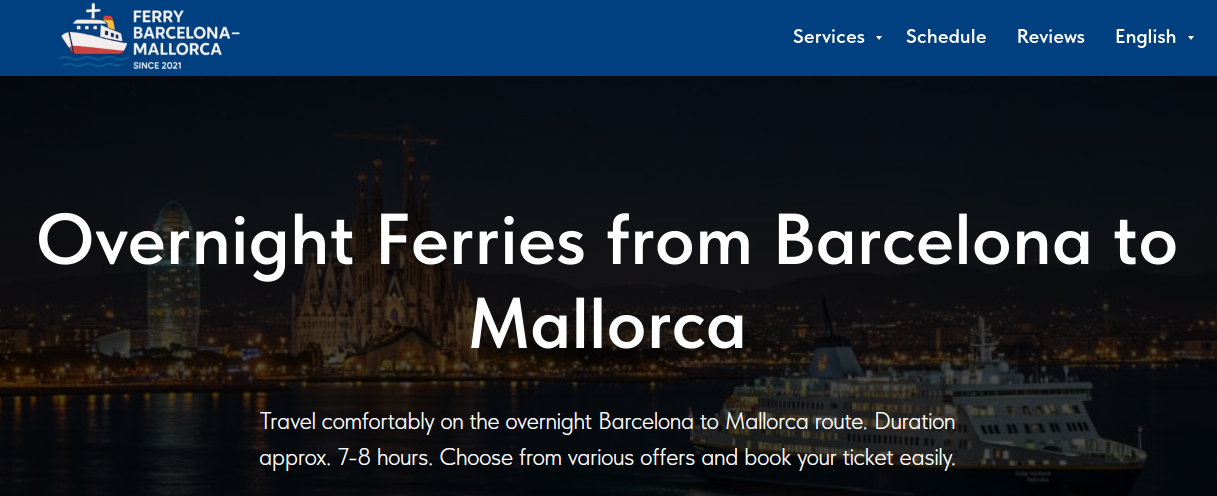
For comfort and convenience, the overnight ferry barcelona to mallorca offers a great way to travel, with detailed schedules and ticket advice available.
The Routes: Pathways Written in StarlightBarcelona to Palma de Mallorca: The Silver Thread
The most traveled route, the Barcelona-Palma line, is a ribbon of silver stretched across 130 nautical miles. By day, it is a sunlit highway of trade and tourism. But by night? The ferry becomes a wandering constellation, its lights reflecting off the waves like fallen stars.
- Distance: 130 nautical miles (approximately 240 kilometers).
- Duration: 7 to 9 hours, depending on the vessel and the whims of the tide.
- Departure: The port of Barcelona, where the citys neon glow fades into the indigo of the sea.
- Arrival: Palma de Mallorca, a jewel of Gothic cathedrals and hidden coves, where the air smells of orange blossoms and old mysteries.
The ships that ply this route—Balearia, Trasmediterránea, GNV—are modern leviathans, equipped with cabins that promise rest but deliver something stranger. Passengers speak of dreams where the ship’s horn echoes in ancient tongues, where the hum of the engines syncs with the rhythm of their own heartbeats.
Why overnight? Because the Mediterranean at night is not the same as the Mediterranean by day. The water is deeper, the wind carries voices, and the horizon blurs into infinity.
Barcelona to Alcudia: The Forgotten Passage
Less trodden but no less enchanting, the route to Alcudia is a detour into the unknown. The ferry glides past the shadow of Menorca, where, according to local lore, the ghosts of Phoenician traders still barter in the dark.
- Distance: 150 nautical miles (approximately 280 kilometers).
- Duration: 8 to 10 hours, a journey that feels both too long and too brief.
- Departure: The same docks, the same salt-kissed air, but with a different destination—Alcudia, where the Roman ruins stand silent witness to centuries of unseen crossings.
- Arrival: A bay where the water is so clear it seems to hold entire galaxies within its depths.
This route is for those who prefer the road less traveled, where the night wraps around the ship like a cloak, and the stars above seem to rearrange themselves just for you.
The Vessels: Steel Beasts with Souls of Their Own
Not all ships are created equal. Some are mere machines; others are entities with wills of their own.
Balearias Fast Ferries: The Comets of the Sea
Sleek, swift, and almost alive, Balearia’s fast ferries cut through the waves like blades. They promise speed, but at what cost? Passengers report fleeting glimpses of figures on deck who vanish when approached—echoes of past voyagers, perhaps, or something else entirely.
- Amenities: Reclining seats that cradle you into dreams, cabins with portholes that frame the endless dark.
- Quirk: The engines sometimes hum in a frequency just beyond human hearing, a sound that lingers in your bones long after disembarking.
Trasmediterráneas Grand Ferries: The Floating Palaces
These are the titans of the overnight routes, vessels so vast they feel like self-contained worlds. They carry not just people but entire ecosystems—restaurants where the wine tastes of distant vineyards, lounges where time moves differently.
- Amenities: Private cabins with en-suite bathrooms, communal areas where strangers share stories they won’t remember in the morning.
- Quirk: The ships clock occasionally loses time. Five minutes here, ten there. No one questions it.
GNVs Night Crossings: The Dreamweavers
GNV’s ferries are said to be the most comfortable, but comfort is a relative term when the sea begins to sing. Passengers wake from deep sleep with the vague memory of a lullaby in a language no one recognizes.
- Amenities: Spacious decks for stargazing, cafes serving coffee that tastes of cinnamon and nostalgia.
- Quirk: The crew never speaks of the other passengers—the ones who board in the dead of night and disappear by dawn.
The Tickets: Currency for a Journey Beyond Maps
Buying a ticket is a transaction not just of money but of intent. The price fluctuates like the tide, influenced by unseen forces.
When to Book: The Dance of Demand and Destiny
- High Season (June–September): The ferries are crowded, the air thick with anticipation. Prices rise like the summer heat, but so does the energy—something electric, something alive.
- Low Season (October–May): The ships are quieter, the nights colder. This is when the true voyagers travel, when the sea feels more personal, more aware.
- Last-Minute Deals: Sometimes, the universe offers discounts. A sudden drop in price, an empty cabin where none should be available. Take it. But ask no questions.
Classes of Passage: Choosing Your Fate
- Economy (Reclining Seats): The budget option, where the line between dreaming and waking blurs. You may arrive with stories you don’t remember living.
- Cabins (Private or Shared): A door between you and the unknown. Lock it if you must, but know that some doors were never meant to stay closed.
- Luxury Suites: For those who wish to travel in style—or those who seek something more. These cabins come with whispers included.
Pro Tip: Book through the official websites—Balearia.com, Trasmediterranea.es, GNV.it—unless you’re feeling brave. There are other ways to secure passage, old ways, but they come with strings attached.
The Unwritten Rules: What the Brochures Wont Tell You
- Never Count the Stars The Mediterranean night sky is vast, but on these ferries, the constellations shift. Sailors who’ve made the crossing for decades swear that new stars appear mid-voyage, only to vanish by morning.
- The Midnight Deck Every ship has one—a place where the lights flicker and the air grows thick. Some say it’s just a trick of the wind. Others say it’s where the ship breathes.
- The Third Meal Around 3 AM, the cafeteria serves something not on the menu. A stew of unknown meat, bread that tastes of home no matter where you’re from. Eat it. Or don’t. But don’t ask what’s in it.
- The Lone Musician On every crossing, there is someone playing a guitar or a violin in the corner of a lounge. Their music is hauntingly familiar, though you’ve never heard it before. Listen. But don’t follow when they beckon.
- The Reflection in the Porthole At some point, you will glance out and see not your own face, but another’s. Smile. Nod. And look away before it smiles back.
Arrival: When the Dream Ends (Or Begins Anew)
Palma de Mallorca greets you with golden light, as if you’ve stepped into a painting. Alcudia’s shores are quieter, the sand holding the imprint of footsteps that weren’t yours.
You will disembark with a ticket stub in your pocket and a sense that something has changed. Maybe it’s the way the air tastes different, or how the locals seem to recognize you though you’ve never met. Maybe it’s the fact that your watch, which worked perfectly before, now loses time.
Some passengers return to Barcelona and find the city subtly altered—a street that wasn’t there before, a café that serves a dish you dreamed of on the ferry. Others stay in Mallorca, as if the island has claimed them. A few never disembark at all.
The Sea Remembers
The overnight ferry from Barcelona to Mallorca is more than a mode of transport. It is a rite of passage, a brush with the unknown. The routes are fixed, the schedules published, the tickets sold—but the experience? That is yours alone.
So when you stand on the deck at midnight, the wind in your hair and the stars above like a map to somewhere else, ask yourself: Are you traveling to an island? Or are you traveling through something far older, far deeper?